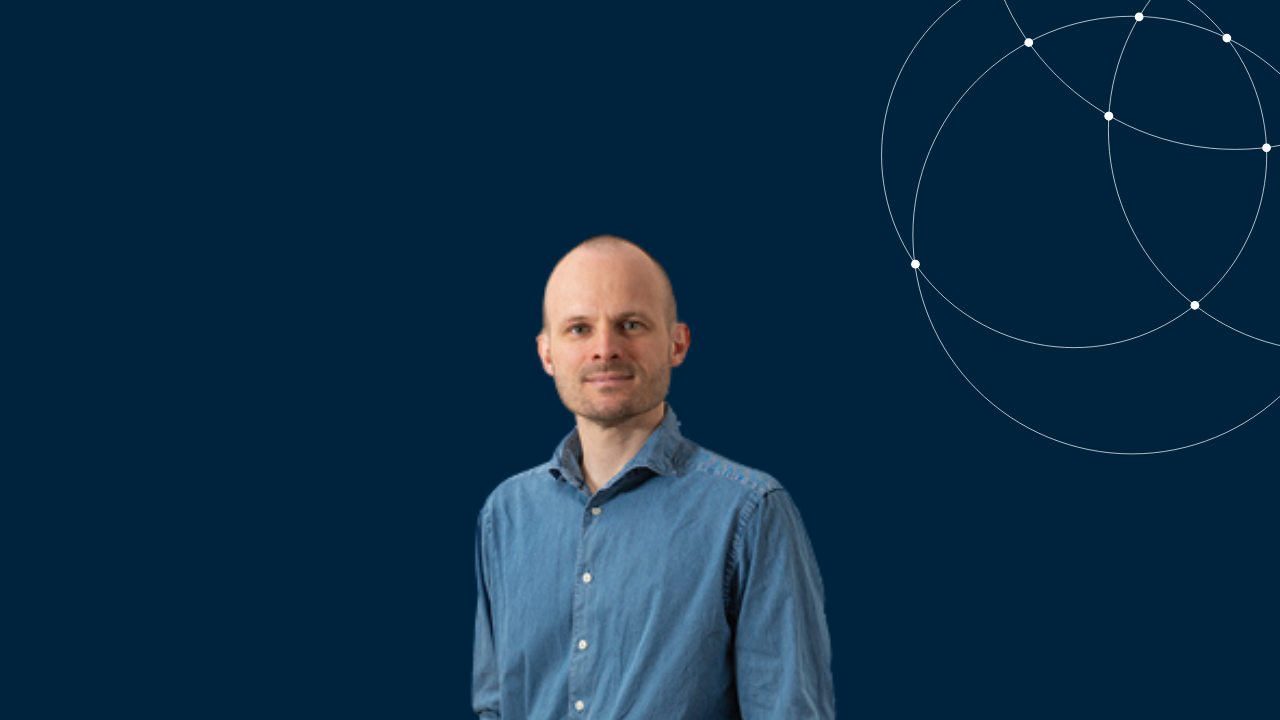
“The goal is not to think less because we have AI, but to use it so we can think better,” says Maria Skjærven, AI expert and speaker specialising in the intersection between artificial intelligence, leadership and the future of work.
AI is changing fast. But perhaps the biggest shift is not what AI can do. It is what we risk stopping doing ourselves.
What started as a tool for searching, writing and generating ideas is rapidly becoming something more powerful. AI can now work across tools, analyse documents, complete multi-step tasks and increasingly act on our behalf.
For leaders, this creates a new question.
Not simply: What can AI do?
But: What should we let it do – and what should we deliberately keep human?
On 12 November 2026, from 9:00–10:00 AM CET, Maria Skjærven will join the EGN LIVE Studio for a global webinar exploring “Beyond the Hype: What AI Really Means for Leaders Now”.
Ahead of the webinar, we spoke with Maria about what has genuinely changed in the AI landscape, what leaders still get wrong, and why human judgement may become more – rather than less – important in an AI-powered workplace.
AI has moved from something we ask to something that acts
For many people, AI began as a sophisticated search engine or writing assistant.
You asked a question. It gave you an answer. You asked it to rewrite something. It produced a text. But that is no longer the full picture.
“The biggest change is that AI has moved from something we ask to something that acts,” Maria explains.
Today, AI can work across our tools, analyse documents, take on entire tasks and carry them through several steps. At the same time, the technology has become cheaper and significantly easier to access.
That means AI is no longer something organisations can simply decide whether to introduce.
It is already there. In employees’ laptops. In their phones. In the tools they use every day. And this is where Maria believes many leaders are still approaching the transformation in the wrong way.
They treat AI as an IT project.
Buy the licences. Write the guidelines. Send out the policy. And expect the organisation to change.
“AI is not mainly a technology change. It changes how people think, learn and work together,” Maria says.
The challenge is therefore not simply adoption. It is organisational learning. People need opportunities to experiment, compare experiences and understand where AI genuinely adds value. They also need space to discuss what they should continue doing themselves.
“If you don’t give your people time to practise and talk about it, you end up with a few enthusiasts racing ahead while everyone else quietly opts out,” Maria explains.
Because the question is not simply how to use AI more. It is also what we might lose if we use it for everything.
What happens when AI does the thinking for us?
This may be one of the most important leadership questions of the AI transformation.
“When AI writes the first draft, we stop struggling with the blank page. And that struggle is often where our thinking actually happens,” Maria says.
The same applies to learning. When AI summarises the meeting, we may no longer listen quite as carefully. When AI solves a difficult task for a junior employee, that employee may miss the experience that would have turned them into an expert five years from now.
Maria uses a simple distinction to describe the difference.
A scaffold helps you build something you could not build alone. Once the building is strong enough, the scaffold comes down.
A crutch, on the other hand, takes over work your muscles are supposed to do.
“A scaffold helps you build something you couldn’t build alone, and then it comes down. A crutch takes over the work your muscles should be doing – and over time, you get weaker,” Maria explains.
The same can happen with AI.
If we allow AI to consistently do the thinking, writing, analysing and problem-solving that helps people develop their own capabilities, we may create a workforce that is more efficient in the short term – but less capable in the long term.
That is why Maria encourages organisations to deliberately protect certain tasks from AI.
Some things should remain human
AI strategy is often discussed in terms of where AI should be used.
Maria argues that leaders also need to ask where it should not be used.
Imagine a pension advisor speaking with someone who has just lost their spouse.
Or a doctor delivering a difficult diagnosis. These are moments where the value is not simply in finding the right information or generating the right words. It is in being present. Listening. Understanding the person in front of you. Choosing the words carefully. Reading what is not being said.
“These conversations need a human being who is present, who prepares with care and who chooses the words themselves,” Maria says.
This does not mean rejecting AI. Quite the opposite. It means becoming more deliberate about where technology belongs.
“Being conscious about where AI does not belong is just as much a part of an AI strategy as deciding where it does,” Maria explains.
Beyond the hype: start with your problems
With new AI tools appearing almost every week, it can be difficult for leaders to distinguish genuine opportunity from technological noise.
Maria’s advice is surprisingly simple:
“Start with your own problems, not with the tools.”
Instead of asking what the latest AI model can do, ask what your organisation actually needs. Does this solve a problem we have today? Does it change how our customers behave or what they expect from us? And would we notice in six months if we ignored it?
“The question is not what AI can do in general. The question is what it can do for your customers, your employees and the problems you are dealing with right now,” Maria says.
Rather than chasing every new development, organisations can focus on the technologies that are relevant to their customers, employees and strategic challenges.
It also creates room for experimentation. Maria recommends giving a small group within the organisation responsibility for testing new AI tools and translating their experiences into plain language for the wider leadership team. That way, leaders do not have to chase every new launch.
They can make decisions based on experience from their own organisation rather than someone else’s demonstration.
When answers become cheap, judgement becomes valuable
Perhaps the most important shift for leaders is this:
“When producing text, analyses and ideas becomes cheap, choosing becomes valuable,” Maria says.
AI can give us ten options in seconds. But someone still has to decide which option is right. For this customer. For this team. For this situation. For this moment.
Human judgement becomes particularly important in three places.
Asking the right question
AI is remarkably good at answering the question it is given. That is also its limitation.
A vague question can produce a confident answer that is completely irrelevant.
“AI answers exactly what we ask. That makes asking the right question a leadership skill,” Maria explains.
The quality of the outcome therefore starts before the AI generates anything. It starts with human curiosity, context and judgement.
Evaluating the output
AI can sound convincing even when it is wrong. It does not automatically understand the history of a relationship, the dynamics within a team or the things that are left unsaid in an organisation.
Someone still has to challenge the output. Does this make sense? What is missing? What assumptions are we making? What do we know that the AI does not?
Taking responsibility
AI can suggest a decision. But it cannot take responsibility for the consequences. People can and ultimately, people are the ones who have to look a customer, colleague or employee in the eye afterwards.
“AI can suggest a decision, but it is people who live with the consequences,” Maria says.
That makes judgement not less important in an AI-enabled organisation. It makes it more important.
The AI strategy leaders should build now
So, what should leaders do over the next 12 months? Maria suggests starting with a simple exercise:
“Map where AI belongs in your organisation – together with the people who actually do the work”.
Not only with the leadership team. Not only with IT. The people closest to the work often know best where AI can create value – and where customers would immediately feel the difference if the human element disappeared.
Then divide the organisation’s tasks into three categories:
- AI takes over
Tasks where AI can create significant value by doing the work itself. - AI assists
Tasks where AI supports the process, but a human remains firmly in charge. - We protect this
Tasks where human presence, judgement, trust, care or relationships are essential.
If the answer is no to all three questions, it can wait. This creates a different approach to AI adoption.
“The people who actually do the work know which conversations need human presence and where customers would feel the difference,” Maria says.
Exercise does something important. It gives people both permission and direction. Permission to use AI where it creates genuine value and direction about what should remain human.
Think deeper with AI
The AI conversation is often framed around productivity. How much faster can we work? How much can we automate? How much can we produce? But perhaps the more important question for leaders is different:
What do we want humans to become better at when machines become better at doing more?
The answer may not be to do less thinking.
It may be to think differently.
To ask better questions.
To challenge more.
To make better judgements.
To listen more carefully.
To spend more time on the conversations that matter.
And to become more conscious about which parts of work should remain deeply human. Maria’s own motto captures the idea:
“Think deeper with AI.”
The goal is not to think less because we have AI. It is to use AI so we can think better.
Because the future of leadership will not belong simply to the organisations that adopt AI fastest.
It may belong to the organisations that understand most clearly where AI should lead – and where humans still need to.