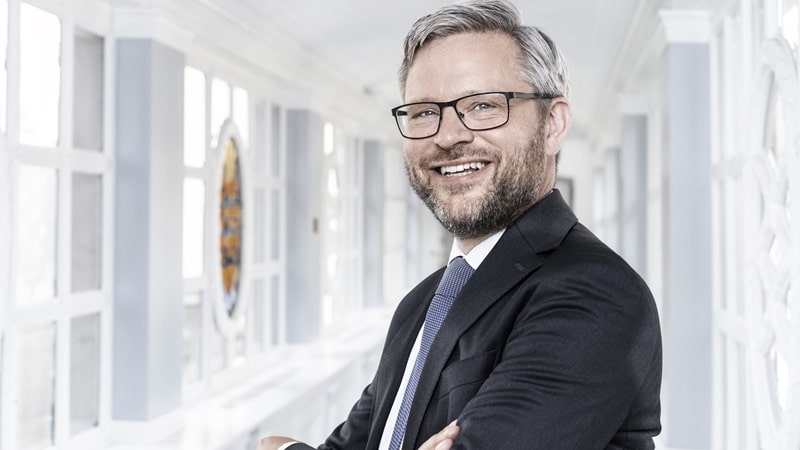
In a world shaped by accelerating technology, artificial intelligence, and constant change, leadership is often reduced to systems, performance, and KPIs. But according to Ulrik Nerløe, the decisive factor is not technology — it is the human being behind the decisions. The competitive advantage of the future depends on energy awareness, inner stability, and human maturity.
“Energy Leadership is not about controlling energy. It is about becoming conscious of the energy you bring into decisions, relationships, and strategic direction,” explains Ulrik Nerløe.
He emphasizes that before a strategy is executed and before technology is implemented, the leader’s inner state has already influenced the direction. In a time when organizations optimize systems and data, the quality of the human energy behind those systems is often overlooked.
Ulrik works with three energy dimensions:
- Personal Energy — responsibility for one’s own state, self-awareness, and emotional consciousness.
- Social Energy — the energy that arises between people; the culture in the room.
- Universal Energy — the connection to purpose and meaning.
“The energy we share makes us both care and dare,” he says. When social energy is constructive, psychological safety, courage, and momentum emerge.
According to Ulrik, technological acceleration today is moving faster than human emotional capacity. The risk is therefore not only disruption from the outside — but unconscious energy from within.
Human Connection and Performance
Ulrik does not see relationships and KPIs as opposites — but as cause and effect.
“KPIs measure results. They do not create them. People do.”
Many organizations are skilled at measuring lagging indicators such as revenue and efficiency. But leading indicators — trust, psychological safety, and emotional maturity — receive far less attention.
When leaders focus only on numbers, employees optimize for numbers. When leaders also focus on energy and relationships, responsibility, engagement, and long-term value creation increase.
“When people feel seen, respected, and connected to a meaningful purpose, they do not perform less – they perform better.”
Energy Awareness Under Pressure
Ulrik clearly distinguishes between energy control and energy consciousness.
“Energy awareness is noticing that you are stressed. Energy consciousness is understanding that where attention goes, energy flows – and consciously choosing where to direct that attention.”
Under pressure, he encourages leaders to ask themselves one central question:
Where is my focus right now?
When attention is directed toward fear and control, stress intensifies. When directed toward responsibility, solutions, and purpose, capacity strengthens.
He highlights meeting culture as a concrete example. In several organizations, he has seen significantly improved quality and effectiveness simply by reducing digital distractions and increasing presence.
“Fragmented attention creates fragmented energy. Shared focus creates momentum.”
The quality of energy matters more than the quantity. Stress-driven energy can create activity – but not sustainable results.
Identity in an AI Era
Across cultures, Ulrik observes the same patterns: self-criticism and identity insecurity drain energy.
He refers, among others, to consciousness research by David R. Hawkins, which suggests that many people primarily operate from energy-draining emotional states such as fear and guilt.
At the same time, our identity is often tied to what we are – title and function – rather than who we are.
With artificial intelligence evolving rapidly, “what we are” is changing faster than ever. Insights from the global CEO advisory firm Egon Zehnder show that a large majority of top executives report the need to develop an unprecedented level of inner adaptability.
“This is not only a strategic challenge. It is an identity challenge.”
When identity feels threatened, energy unconsciously shifts from innovation to self-protection.
“People connect with people – not roles with roles.”
The Future of Conscious Leadership
Ulrik is clear in his vision:
“The future will be led by the most conscious and human leaders.”
This is not about soft leadership, but about expanded inner capacity – the ability to hold uncertainty without becoming reactive.
“Consciousness and predictability are the keys to the future.”
We cannot control external disruption, but we can take responsibility for our own energy. The more conscious a leader is of their inner state, the more stable and predictable their response becomes – and predictability builds trust.
Ulrik describes the CEO’s role as a form of “Chief Energy Officer,” because energy at the top always cascades throughout the organization. But responsibility does not stop there – personal energy is everyone’s responsibility.
“Strategy does not compensate for transmitted fear. Energy spreads faster than information.”
The organizations that master the synergy between personal energy, social energy, and purpose will be the ones that shape the future.