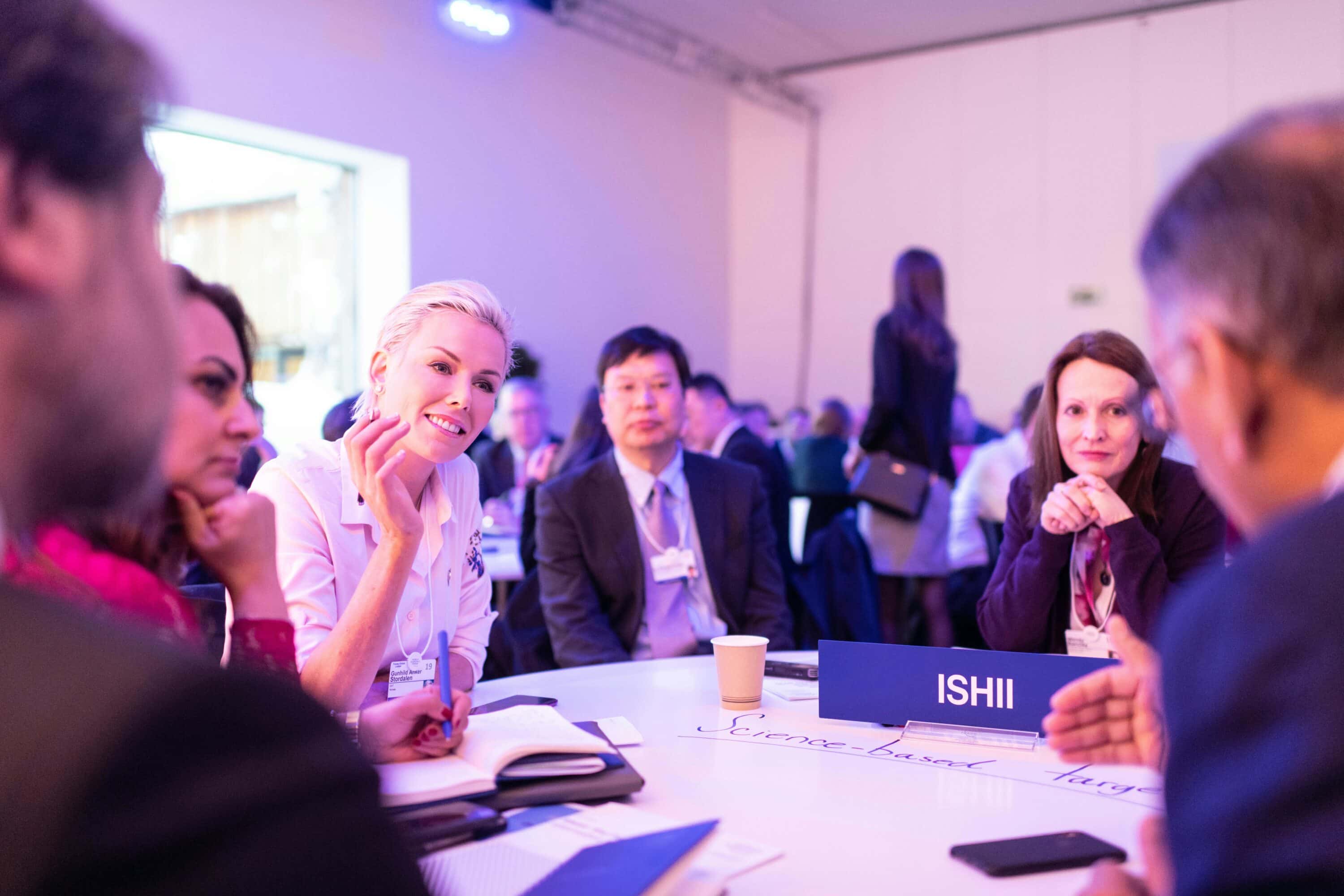
Photo by Evangeline Shaw on Unsplash
Introduction: Best Executive Networks in Switzerland
Switzerland hosts several prominent executive networks and peer advisory organizations, each designed to serve different leadership needs across Zurich, Geneva, Basel, Bern, Zug and beyond. If you are a senior leader evaluating where to invest your time and trust, this guide offers a structured, practical overview of the best executive networks in Switzerland, what distinguishes them, and how to determine which format genuinely fits your role and objectives.
The focus here is on curated executive peer advisory groups, premium leadership communities, and structured business associations. For Swiss-based or Swiss-focused executive professionals seeking high-quality, confidential environments where their thinking is challenged and their decisions strengthened over time.
A direct answer: the “best” executive network depends on your objectives, seniority and time commitment. The landscape divides broadly into curated peer advisory groups such as EGN Switzerland, global leadership and founders communities, chambers of commerce and bilateral business associations, and industry-specific executive associations. Each category plays a distinct role, and most experienced leaders benefit from combining several formats into a portfolio approach.
Key Categories of Executive Networks in Switzerland
Not all executive communities serve the same purpose. In Switzerland, four main categories are relevant, and understanding their distinct roles helps you invest your time where it will have the greatest impact on your strategy, leadership and decision quality. Think of these as complementary tools in a development toolkit, each fulfilling a different function.
Four Main Formats Swiss Executives Use
Curated peer advisory groups such as EGN Switzerland offer a confidential space where your thinking is developed and challenged through trusted peers. Groups of 15 to 20 non-competing members meet 5 to 6 times a year, facilitated by a professional Chair who adapts the approach depending on the group’s needs. Beyond immediate problem solving, these groups provide a structured environment to build deep peer relationships and learn directly from the real world experiences of fellow senior leaders. The focus is on broadening strategic thinking, exploring unformed ideas, and refining decisions before action. Peer groups support decision-making through shared experiences, and the ongoing trust that develops over time is what makes the sparring genuinely valuable.
Executive and leadership coaching provides effective one-on-one development tailored to personal leadership behaviour, individual skill-building and communication patterns. Coaching helps managers grow into more impactful leaders by building self-awareness, emotional intelligence, and focused performance skills. It offers dedicated, one-on-one expert guidance, compared to group formats that mostly focus on broader peer learning across different industries. For leaders navigating complex transitions, the differences between coaching and peer advisory are worth understanding clearly .
Business and industry associations, chambers and clubs offer broad, open-attendance spaces designed primarily for expanding contact lists, civic presence, advocacy and initial introductions. They play an essential role in economic integration, policy dialogue and market-entry support, especially for leaders involved in cross-border trade or building a national footprint.
Formal executive education through institutions like IMD, University of St. Gallen, ETH executive programs and international MBAs provides exceptional foundational frameworks, specialised knowledge and structured academic credentials. These function as dedicated, time-bound investments in skills and analysis rather than continuous, real-time peer sparring on live operational topics.
Comparison Table: Peer Advisory vs Other Options
| Criterion | Curated Peer Advisory (e.g. EGN Switzerland) | Networking Associations and Business Clubs | Executive Coaching | Executive Education (MBA / EMBA) |
| Primary focus | Strategic sparring: “My thinking developed and challenged through trusted peers” | Relationship-building: “Access to people and relationships” | Personal development: “Me and my leadership growth” | Structured learning: “Frameworks, credentials and knowledge” |
| Format | 15-20 non-competing members, 5-6 meetings per year, professional Chair facilitation | Large-scale events, briefings, dinners, policy forums | One-to-one sessions, tailored cadence | Campus-based or blended, time-bound program |
| Confidentiality and depth | Chatham House Rule, non-competing group curation, Chair oversight | Varies; generally more public-facing | High (confidential one-to-one relationship) | Cohort-based case discussion, academic setting |
| Typical participants | C-suite leaders, managing directors, functional heads | Broad business community, from managers to board members | Individual leader at any level | High-potentials, mid-career to senior executives |
| Best suited for | Testing big decisions, exploring early-stage ideas, cross-industry perspective | Expanding contacts, market visibility, policy awareness | Behaviour change, communication skills, career transitions | Gaining new frameworks, academic credentials, structured training |
These categories are not competing alternatives. They serve different executive needs. Most senior leaders in Switzerland who invest seriously in their development combine several of these formats. Peer advisory covers live decision sparring alongside the visibility that associations provide and the personal development that coaching and education deliver. The question is which combination best fits your current objectives and time horizon.
With this framework in mind, here is an overview of specific executive networks currently active in Switzerland.
Leading Executive Peer and Leadership Networks in Switzerland
This section provides an objective overview of notable executive-focused communities operating in Switzerland. Each serves different needs, and the descriptions below are designed to help you assess fit rather than rank one above another. Selection is based on national relevance, clear executive focus and regular activity in Swiss hubs such as Zurich, Geneva, Basel, Lausanne, Zug and Bern.
EGN Switzerland: Curated Peer Advisory for Senior Leaders
EGN Switzerland is part of the Executives’ Global Network, founded in 1992 and part of the Vistage Worldwide family of companies. Globally, EGN serves approximately 13,000 members across 13 countries, organised into roughly 900 peer groups covering more than 70 functional and professional areas. In Switzerland, EGN has around 130 members across persona-matched networks designed for CEOs, CFOs, HR Leaders, Corporate Communications and Female Leaders.
Each group is intended for 15 to 20 members who share similar levels of decision complexity and organisational influence, who come from various industries and do not compete with one another. Members meet 5 to 6 times a year in sessions held across Swiss business hubs. Membership criteria for executive networks generally involve seniority, organizational scale, and approval processes, and EGN’s approach reflects this through a thoughtful, three-stage onboarding process built on transparency, peer parity and group trust.
How does the Onboarding Process work?
Stage 1: Holistic Advisor Assessment. The Network Advisor evaluates candidates individually based on overall leadership scope, decision complexity and organisational influence. Potential competitive or organisational overlaps are addressed transparently with existing members at this early stage.
Stage 2: Chair Alignment. The Chair reviews the candidate’s background to confirm strong dynamic fit and balance within the active cohort.
Stage 3: Member Safeguard. Existing members review the candidate as a final check to protect group trust and surface any unforeseen connections before onboarding.
How do peer advisory groups function?
Each meeting is structured around three core pillars. The Topic provides shared learning, new perspectives and group discussion, sometimes featuring an external expert. The Host is a member who opens their organisation to the group, presenting a real case or challenge for collective exploration. Ideation and Issue Processing gives every member the opportunity to bring an issue, idea or emerging thought into the room. The group helps expand thinking, explore different perspectives and possibilities, challenge assumptions and draw on the collective experience around the table.
EGN Switzerland is designed to support executives throughout their leadership journey—offering a sounding board for complex challenges, strategic growth, and personal development. The value extends well beyond formal sessions. Members also become part of the broader EGN Switzerland community through Community Exchanges, an annual Summit, and the global Members’ Universe digital platform, which provides access to peers across 13 countries. Trusted peer relationships develop over time, and members continue to learn from and support one another as their challenges evolve.
Global Leadership, Global Corporations, and Founders Communities Active in Switzerland
Several international communities for chief executives and founders maintain an active presence in Switzerland. YPO has chapters in Geneva and Zurich, offering global connections, transformational programs and forums for leaders who meet specific criteria around leadership scale. EO Zürich, part of the Entrepreneurs’ Organization with over 18,000 members across 76 countries, has approximately 150 entrepreneurs and 30 in its EO Accelerator program.
Swisspreneur Scaleup Circle is a curated peer platform for Swiss scaleup founders and operators, typically companies that have reached Series A or equivalent scale. Its emphasis is on candid, operator-to-operator exchange for leaders navigating growth complexity beyond early stage. For leaders in start-ups and high-growth ventures, these communities provide dynamic cross-border connections and entrepreneurial inspiration.
These global networks tend to be strongest when it comes to international exposure, founder-to-founder exchange, and younger high-growth company focus. They attract a blend of Swiss and international members, with events in Zurich, Geneva and Lausanne. For leaders seeking both global reach and a locally rooted, persona-matched peer advisory format, these options complement rather than replace offerings like EGN Switzerland.
Swiss Chambers of Commerce and Bilateral Business Associations
Local and bilateral chambers play an essential role in economic integration, policy advocacy and broad business visibility. Organisations such as cantonal chambers of commerce in Zurich, Geneva, Vaud, Ticino, and bilateral chambers (Swiss-American, Swiss-Chinese, Swiss-French and others) offer activities including policy dialogue, large-scale events and sector briefings, market-entry support for cross-border trade, and opportunities to build civic presence across Swiss regions.
These are valuable for staying informed on trade regulations, building a national footprint and establishing contacts when expanding operations. For leaders responsible for cooperation across borders or managing infrastructure investments in new markets, chambers provide an important foundation.
Industry-Specific Executive Associations and Technology Management Think Tanks
Sector-focused groups provide deep technical relevance and specialised knowledge exchange. Examples include Swiss banking and insurance groups, manufacturing and technology associations, life sciences and pharma clusters concentrated around the Basel area, and organisations like EXPERTsuisse, which offers professional quality labeling and advocacy support for leaders in audit, tax and fiduciary roles. AMAS provides regulatory updates and influence on Swiss self-regulation standards, serving members in asset management and financing.
SwissVC is a closed peer community for venture capital professionals, structured into guilds of 8 to 15 active practitioners focusing on operational issues such as AI-assisted due diligence, LP reporting and firm architecture. Family Business Circle Switzerland, established in 2018, brings together approximately 200 family businesses for up to six events per year in the Greater Zurich area, addressing succession, inheritance, governance and intergenerational dynamics.
TIGER 21 targets ultra-high-net-worth entrepreneurs, investors and executives with intimate group meetings focused on wealth, legacy and personal interests of success and influence. The Entrepreneurs’ Roundtable (ERT) operates Swiss chapters in Zurich and Geneva, with members meeting several times a year for dinners and discussion, plus an ERT NEXT program for the next generation of leaders.
Many EGN Switzerland members also participate in industry associations and broader networks, using their peer advisory group to cross-pollinate ideas beyond their home industry. The “best” portfolio of networks is usually multi-layered: broad sector associations for domain expertise, chambers for regional reach, and a confidential peer advisory room for high-trust, strategic problem-solving.
How to Choose the Right Executive Network or Peer Advisory Group
This section offers practical evaluation criteria to help you assess any executive network, using EGN Switzerland’s structure as an example of how these criteria function in practice.
Clarify Your Primary Objective and Time Horizon
Start by identifying one or two core goals. Are you seeking strategic sparring on major decisions such as market entry, M&A or leadership transitions? Broader market visibility in Switzerland? Personal leadership development and behaviour change? Support navigating a career pivot or international move? Strategic decision-making focuses on market potentials and shareholder interests, and clarifying your objectives helps you identify which type of network aligns with your current priorities.
Align your expected results with a 6 to 12 month horizon rather than expecting immediate transactional gains. Networking can lead to new business opportunities and growth, but the most significant value from peer advisory comes through cumulative trust and increasingly candid conversations over time. EGN Switzerland, for instance, defines individual success criteria with members at onboarding and revisits them regularly with the Chair, so both parties can track whether the experience is delivering on what matters most to each leader.
Assess Group Composition, Seniority and Non-Competing Dynamics
Key questions to ask any executive network:
What is the typical profile in the room: role, company size, responsibility scope? Executive networks in Switzerland are designed for C-suite leaders, managing directors, and board members. How is competitive overlap minimised and handled before someone joins? Is there a clear “DNA” for each group, such as CFOs of mid-to-large organisations or Swiss-based CEOs with regional mandates?
EGN Switzerland’s three-stage onboarding process illustrates how structural trust is created. The Advisor assessment focuses on leadership scope, decision complexity and transparent discussion of potential overlaps. Chair alignment confirms cohort fit and group dynamic balance. The member safeguard allows existing members to surface connections or conflicts before a new leader joins. This is a thoughtful, collaborative process designed to foster peer parity and build a trusted environment from the outset.
If your concern is whether people in the room will genuinely be at your level, understand that in serious peer advisory environments, the focus is on similarity of decision complexity and organisational influence, not titles alone. Leaders gain diverse perspectives through peer group discussions precisely because the group is curated for parity of experience, even across different industries and functions.
Examine Meeting Cadence, Format and Facilitation Quality
Evaluate the practical elements of any network you are considering. How often does the group meet, and for how long? Effective leaders meet 5 to 6 times a year in peer groups, and EGN Switzerland schedules these sessions well in advance to accommodate travel, board duties and operational demands. What is the balance between structured agenda time and informal conversation that builds the personal trust necessary for high-stakes sparring?
Look closely at the facilitator or Chair: their experience with senior leaders, their ability to manage group dynamics, and their skill in creating psychological safety. High-quality peer advisory rooms structure meetings around shared learning topics or expert input, member host company deep-dives, and ideation or issue processing blocks where each member can bring live challenges or emerging ideas. The Chair adapts facilitation depending on the group, the subject and what members need. EGN deliberately avoids following one fixed methodology, recognising that the best sessions balance structured frameworks with essential informal dialogue.
The right cadence should feel significant enough to influence real decisions but remain realistic alongside a demanding calendar.
Check for Confidentiality Principles and Anti-Selling Norms
In a small, interconnected market like Switzerland, explicit confidentiality frameworks are key. Confidential networking fosters trust among executive peers, and the environment needs to be one where you can speak openly about challenges, early-stage ideas and organisational realities without concern.
Look for structural trust elements: clear norms such as the Chatham House Rule, group curation designed to minimise competitive tensions, Chair enforcement of behavioural standards, and an explicit non-selling culture inside the room. EGN Switzerland combines all of these elements, creating conditions for candid discussion through design.
Can you really speak openly? The honest answer is that no organisation can promise absolute guarantees. What distinguishes serious peer advisory is that confidentiality and psychological safety are built into the architecture: non-competing group principles, professional facilitation, and peer commitment to the norms. Exclusive events allow members to build valuable relationships with senior leaders across industries precisely because that trust is protected structurally.
Building Lasting Value from Executive Networks in Switzerland
The value of any executive network is cumulative. Trust and insight deepen over time as members keep returning with real decisions, and the leaders who gain the most are those who engage intentionally from the start.
Onboarding Intentionally: First 3–6 Months
Approach your first meetings with purpose. Arrive with one or two strategic questions or dilemmas you are ready to discuss, even if they are still early-stage ideas. The proposition is that you are already an experienced leader, and a peer advisory group gives you access to perspectives, experiences and conversations that are difficult to create inside your own organisation.
Schedule a one-to-one conversation with the Chair to clarify your objectives and context. Set personal success criteria for the first 6 to 12 months: improved clarity on a market entry, a stronger people strategy, better-prepared board conversations, or sharper thinking on digital transformation and new technologies affecting your sector. Continuous development enhances leadership effectiveness and strategic thinking, and defining what success looks like for you personally ensures the experience delivers measurable progress.
EGN Switzerland supports new members through pre-meeting calls, introductions and context about other members’ backgrounds. This onboarding is designed to help you integrate quickly so that the group becomes a trusted resource from your very first session.
Contributing Openly: Turning a Room into a Trusted Peer Circle
Consistent, open contribution is what converts a meeting into a trusted advisory board. Bring real cases, not only polished success stories. Be willing to share what did not work in your own organisation to help others identify and avoid potential similar missteps.
This level of candour is what allows executives to test their thinking before facing their board, investors or employees with a fully formed decision. Best practices sharing enhances strategic clarity and decision-making, and it is the willingness to be genuinely open that transforms a group of accomplished individuals into a circle of trusted peers. The more you contribute, the more the room gives back.
Maintaining Connections and Embracing New Technologies Between Meetings
The strongest value often comes from a combination of structured meetings and informal peer interactions. Follow up with peers via LinkedIn or direct contact after each session on specific topics discussed. Use digital platforms such as EGN’s Members’ Universe to tap into global expertise between physical meetings and access to a global advisory network is essential for solving complex management challenges that do not wait for the next scheduled session.
Attend cross-group Swiss events such as EGN Community Exchanges and the annual Summit to broaden your connections within the peer advisory community. Professional networks in Switzerland meet regularly to share best practices and explore strategic business topics, and these touchpoints between regular meetings keep relationships active, engaging, and productive.
Consider how your professional presence supports these relationships. An executive LinkedIn profile that clearly communicates your leadership scope, current responsibilities and strategic focus areas (whether in operations, sustainability, innovation or another domain) reinforces the credibility that makes peer connections valuable.
The best executive network for you: Take the Next Step in Your Networking Journey
In Switzerland’s compact but globally connected economy, the best executive networks are those that combine long-term relationships with a trusted space to think, challenge assumptions and refine decisions over time. There is no single “right” answer. The strongest approach is usually a portfolio: industry and chamber involvement for reach and influence, executive education and coaching for personal development, and a curated peer advisory group such as EGN Switzerland for confidential strategic sparring with experienced peers.
To get started: Take time to clarify your specific objectives and time horizon, map out where you currently lack a trusted advisory space, and schedule introductory conversations with a few peer advisory organizations operating in Switzerland.
If you are ready to explore whether EGN Switzerland’s peer advisory model fits your leadership context, book a non-committal 15-minute introduction call and discuss your situation directly with an EGN Network Advisor.
FAQ
Is executive peer advisory really worth my time compared to everything else I could be doing?
This is the single most frequent concern after an initial conversation. Five to six peer group meetings a year, each lasting approximately five hours, represent a meaningful commitment, and they should. Beyond these sessions, members have opportunities to participate in the annual Summit, Community Exchanges, webinars and connect with peers between meetings. These experiences are designed to support high-stakes decisions that shape multi-year outcomes for your organisation, your team and your own career. Frame the value not as hours spent but as sharper thinking, better-prepared conversations with your board and employees, and reduced isolation at the top. Companies benefit from strategic leadership through customized future-focused strategies, and peer advisory is one of the most direct ways to develop that strategic clarity. Effective strategic leadership drives measurable results and timely adaptations, and the leaders who commit consistently tend to see cumulative returns that compound over time.
Isn’t EGN just another networking organisation?
The distinction matters. Networking offers access to people and relationships. Peer advisory offers a structured environment for testing ideas, challenging assumptions and exploring decisions before they go live. Many executive networks emphasize mentoring, coaching, and access to exclusive opportunities for members, but what sets curated peer advisory apart is the depth of confidential conversation that becomes possible when trust is deliberately built over time. Many EGN Switzerland members already have extensive professional networks. They join specifically to enter a trusted advisory room: a space designed to expand their thinking, sharpen their insights, and deepen their strategic impact.
Will the people in my group actually be at my level?
This is one of the most common questions, and it is the right one to ask. Serious peer advisory networks in Switzerland curate for peer parity, focusing on similarity of decision complexity and organisational influence rather than titles alone. EGN Switzerland’s three-stage onboarding process, from Advisor assessment through Chair alignment to member safeguard, is specifically designed to ensure that every person in the room brings relevant scope and experience. Peer groups help leaders gain new perspectives precisely because each member operates at a comparable level of strategic responsibility.
Will the conversations be relevant to what I am facing right now?
Persona-based groups (CEO, CFO, HR Leaders and others) ensure that the people in your room share your functional reality and decision landscape. Beyond that, the Issue Processing and Ideation formats mean that every member can bring their own live challenge to the agenda. Topics track closely with current Swiss business realities, from digital transformation and talent strategy to market entry, financing decisions and organisational restructuring. Strategic leadership aligns personal values with business goals, and the conversations are always anchored in what members are actually navigating.
Can I really speak openly and confidentially in this room?
Confidentiality is supported through structural design: the Chatham House Rule, non-competing group principles, professional Chair stewardship and shared member norms. In Switzerland’s compact business environment, these elements are especially important. No organisation can promise absolute guarantees, but these frameworks are designed to foster psychological safety and create the conditions for genuinely open dialogue. Executive networks often facilitate confidential sparring sessions for leaders to discuss strategic decisions, and the culture within the room is shaped by every member’s commitment to the norms.
Why not just rely on my internal team, board, or a coach?
Internal teams bring deep organisational context, but they operate within reporting lines and organisational politics that can limit unfiltered exploration. Your board carries governance and oversight responsibilities that shape the conversations you can have. A coach offers a valuable single perspective focused on your personal leadership behaviour and development. Each of these is essential, and none should be replaced. A confidential peer advisory group adds something different: a cross-industry, multi-perspective space where you can explore emerging challenges, refine your strategic direction, and elevate your leadership approach away from formal authority structures. The question a senior leader faces is not whether outside perspective is valuable. It is whether that perspective comes from a confidential room of experienced peers built to sharpen your thinking at every stage, or whether you navigate complex leadership demands in isolation.