The world is changing faster than most organisations can keep up.
Artificial intelligence is advancing at record speed, geopolitical tensions are reshaping markets overnight, and climate change is challenging business strategies. At the same time, leaders are expected to provide direction in a world where uncertainty has become the new normal.
But perhaps the greatest challenge isn’t the future itself. Perhaps it’s the way we think about it.
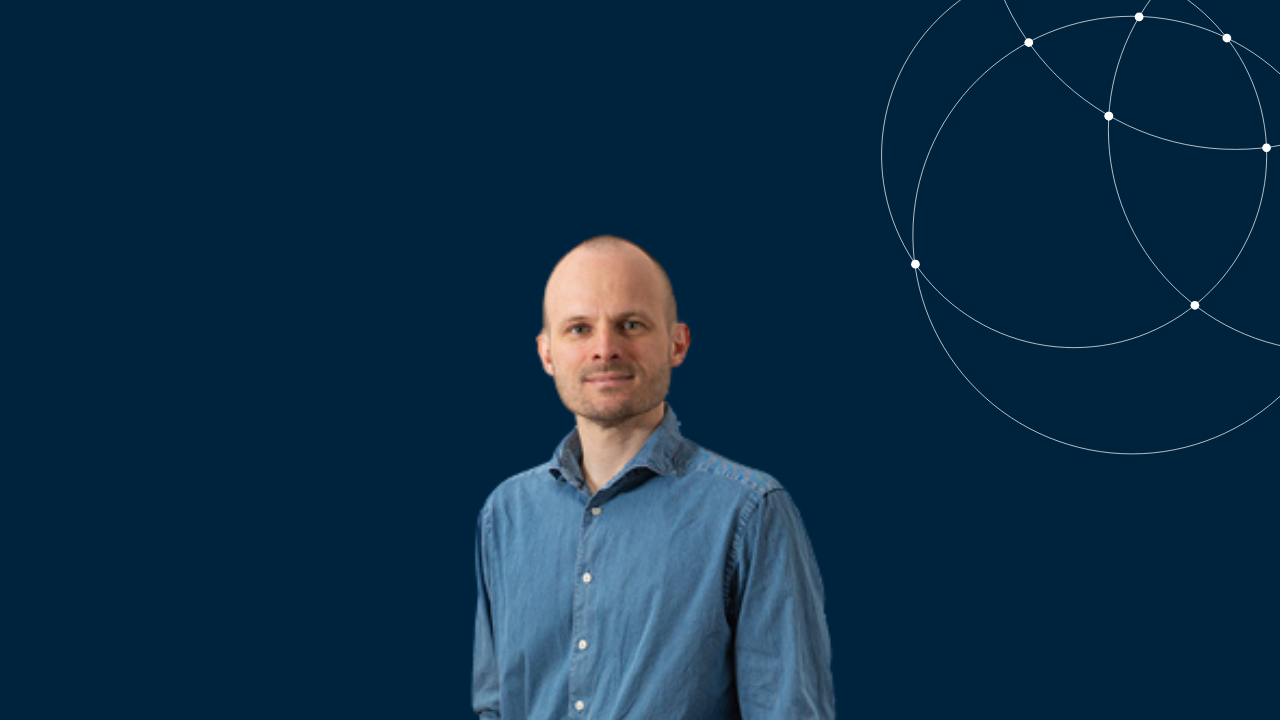
That is the view of futurist, psychologist, author, and advisor Thomas Geuken. In his new book, Take Back the Future (Tag fremtiden tilbage), he combines insights from futures studies and psychology to show how leaders can develop a stronger relationship with the future and regain their ability to act.
During the Danish EGN Live Webinar on 14 August, 10:00–11:00, Thomas Geuken will share his perspectives on how leaders can cultivate a future mindset that creates hope, direction, and action.
”Human beings have one superpower that no other species possesses: imagination. It enables us to shape the world – not merely adapt to it. But today, we’ve forgotten how to use it,” says Thomas Geuken.
Two Futures – and Only One You Can Shape
One of the book’s central messages is that we need to distinguish between the Future with a capital F and the future with a lowercase f.
The Future with a capital F consists of the global forces beyond our control: geopolitics, climate change, artificial intelligence, and technological development.
The future with a lowercase f, on the other hand, is the future we can influence through our decisions, relationships, and priorities within our organisations.
The problem arises when we confuse the two.
”When the Future with a capital F takes up too much space, we become overwhelmed by the future. We forget how much control we actually have over the future with a lowercase f,” explains Thomas Geuken.
When leaders devote all their energy to global crises, they risk losing sight of what they can actually influence.
Thomas Geuken describes our era as the Age of Unrest – a time in which conflicts, crises, and technological breakthroughs dominate our attention to such an extent that many leaders lose their sense of agency.
”You go from being the navigator to becoming a passenger.”
Taking back the future is therefore not about predicting what lies ahead. It is about reclaiming our ability to imagine multiple possible futures. When that happens, both hope and the capacity to act begin to grow.
Imagination Is a Strategic Leadership Capability
One of the greatest mental traps is what Thomas Geuken calls learned futurelessness.
”You give up before you’ve even tried because everything seems too big and overwhelming.” Thomas explains.
But that’s far from the only trap.
Some leaders try to create a sense of security by presenting a single optimistic vision of the future. According to Thomas Geuken, this rarely works.
”Fear is merely suppressed and sooner or later, it returns,” says Thomas.
Another challenge arises when an organisation’s imaginative capacity becomes too narrow.
”Your capacity to imagine defines your capacity to act. If you can only see one path, you can only walk one path,” Thomas explains.
When leaders imagine only one possible future, they become more vulnerable to paralysis. By contrast, considering multiple scenarios provides a broader foundation for decision-making and creates clearer strategic direction.
That’s why the leadership of the future is not about predicting what will happen – it is about deliberately exploring multiple possible futures.
Thomas Geuken also highlights several cognitive biases that can undermine effective leadership. Optimism bias may cause leaders to overestimate the strength of their own strategies. Groupthink can suppress critical perspectives. And during periods of high uncertainty, people often choose what is familiar rather than what is necessary.
Leadership well-being is everyone’s responsibility
For many years, leadership well-being has been viewed as something leaders should manage themselves. Lill believes that mindset needs to change.
”Leadership well-being is not built in isolation. It is built through relationships, culture and strong leadership communities.” Lill explains.
Organisations need to create environments where leaders can openly discuss both the factors that energise them and those that create strain. Leadership teams should become spaces for genuine peer support, as well as for effective collaboration and operational decision-making.
Senior executives also have a significant influence. Every day, CEOs shape leadership well-being through the priorities they set, the resources they allocate and the culture they create.
From Risk Management to Action
Many organisations devote most of their energy to identifying and minimising risks. While this is necessary, leadership that focuses solely on protecting against worst-case scenarios risks overlooking the opportunities the future also holds.
According to Thomas Geuken, future-focused leadership requires realistic optimism:
”You face the difficult realities of the Future with a capital F. But at the same time, you actively use your imagination to create hopeful and desirable directions for the future with a lowercase f.”
The point is not to ignore uncertainty, but to avoid allowing it to define what is possible for the organisation.
”We cannot control the Future with a capital F. But we can take responsibility for the future with a lowercase f,” emphasises Thomas Geuken.
When leaders strengthen their imagination, they also expand their organisation’s room for action. They become better at challenging conventional thinking, experimenting with new solutions, and providing direction in a world where no one has all the answers.
Perhaps the most important leadership capability, then, is not the ability to predict the future – but the ability to imagine multiple possible futures and have the courage to create them.